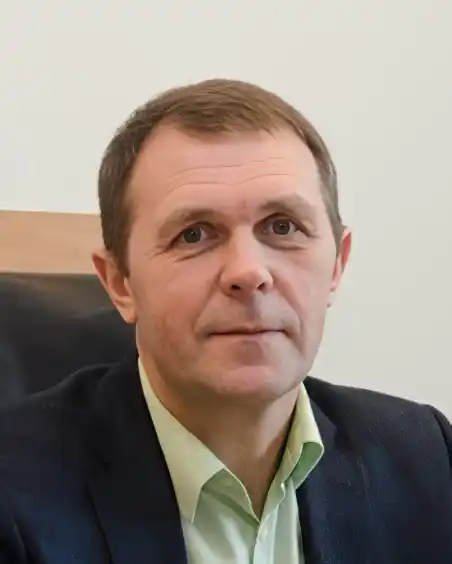
Position: former judge of the Grand Chamber of the Supreme Court.
Sphere of corruption: judicial.
Region of corruption activity: Kyiv city.
Qualification: the actions are qualified under Part Four of Article 368 of the Criminal Code of Ukraine.
Status: at large.
The plot of the case: in late May 2026, law enforcement officers reported new suspicions of corruption involving former Supreme Court Chairman Vsevolod Knyazev. The media reported that the current judges involved were Zhanna Elenina, Igor Zhelezny, and Iryna Grigorieva.
On May 19, NABU and SAPO announced searches in connection with the Supreme Court corruption case. Investigative actions were carried out at the workplaces, residences, and vehicles of a number of current and former Supreme Court judges.
According to the investigation, three current Supreme Court judges received a bribe for making a decision in the interests of the owner of the Finance and Credit group, Konstantin Zhevago. As reported by anti-corruption authorities, suspicions in this case were also reported to retired Supreme Court judges.
Zhanna Elenina — a Supreme Court judge since 2019, with over 25 years of experience. During a search in 2023, Zhanna Elenina was found with $50,000, $127,750, and €10,000. This money was stored in various places: an A4 envelope, a backpack, and a folder found in the kitchen in a corner of a closet.
The court seized $50,000 because the series and numbers of the banknotes matched the funds previously transferred to Knyazev. At the same time, the Supreme Court refused to seize $127,750 and €10,000 because no physical evidence was found on these funds and they were allegedly not relevant to the case.
Igor Zheleznyy has been a judge of the Supreme Court since 2019. Iryna Grigorieva has been a judge for over 30 years, in the Supreme Court since 2017. Since 2023, Grigorieva has been involved in a corruption case involving the former head of this court, Vsevolod Knyazev. During searches, 50,000 US dollars were found in her and her colleagues' possessions - the series and numbers of these banknotes matched those in the case. The money was seized, but the judge was only suspected at the end of May.
According to the investigation, in March-April 2023, businessman Zhevago transferred $2.7 million to a lawyer through an intermediary so that he could transfer these funds to former chairman Vsevolod Knyazev and the judges of the Supreme Court to make the "necessary" decision.
And already in May, according to the investigation, $1.8 million was distributed between the then-Chairman of the Supreme Court and the judges.
According to NABU, the case concerns 40.19% of shares of the Poltava Mining and Processing Plant, which were purchased in 2002 by a Ukrainian businessman, the owner of the Finance and Credit group, Kostyantyn Zhevago.
In 2023, Knyazev was informed of the suspicion, and the case against him is still being heard at the Supreme Court of Justice. In the same year, NABU searched the homes of a number of Supreme Court judges and seized funds whose series and banknote numbers matched those transferred to Knyazev.
In July 2023, businessman Zhevago himself was informed of the suspicion, and the intermediary was informed in September 2025.
On May 21, the High Anti-Corruption Court (HACC) imposed preventive measures on two Supreme Court judges in a case of a bribe of $2.7 million for a decision in favor of the owner of the Finance and Credit group. These are Iryna Grigorieva and Igor Zhelezny. The VAKS set bail at UAH 2.5 million for Grigorieva and UAH 2 million for Zhelezny.
On May 25, the High Anti-Corruption Court chose a preventive measure for Judge of the Grand Chamber of the Supreme Court Zhanna Yelenina in the form of bail in the amount of UAH 3 million.
On May 28, 2026, the Supreme Court of Ukraine chose a preventive measure for former Supreme Court judge Oleksandr Prokopenko in the form of bail in the amount of UAH 900,000.
Persons potentially involved in corruption schemes: in addition to Prokopenko, the corruption scheme also includes former Supreme Court Chairman Vsevolod Knyazev, Supreme Court Judge Zhanna Yelenina, Supreme Court Judge Iryna Grigor'yeva, Supreme Court Judge Ihor Zhelezny, businessman Kostyantyn Zhevago, and an intermediary.
Assets: In his 2024 declaration, Prokopenko indicated that he owns an apartment in Kyiv (worth 1.4 million hryvnias), a parking space, and rents non-residential premises. In addition, together with his wife Natalia, he owns a residential building and a land plot in the Kyiv region.
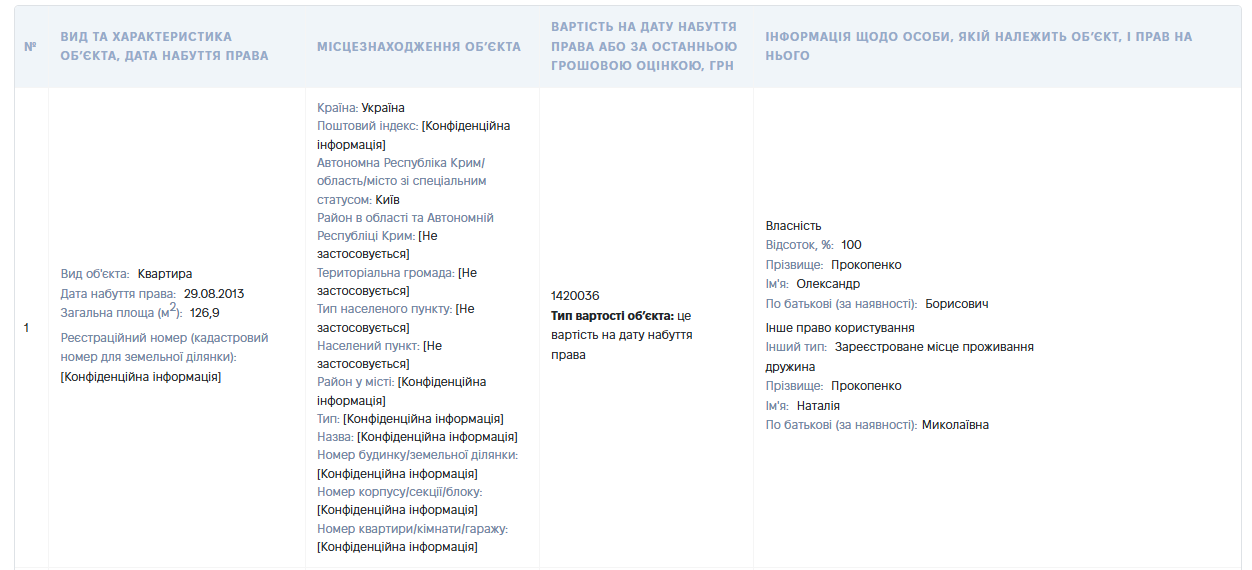
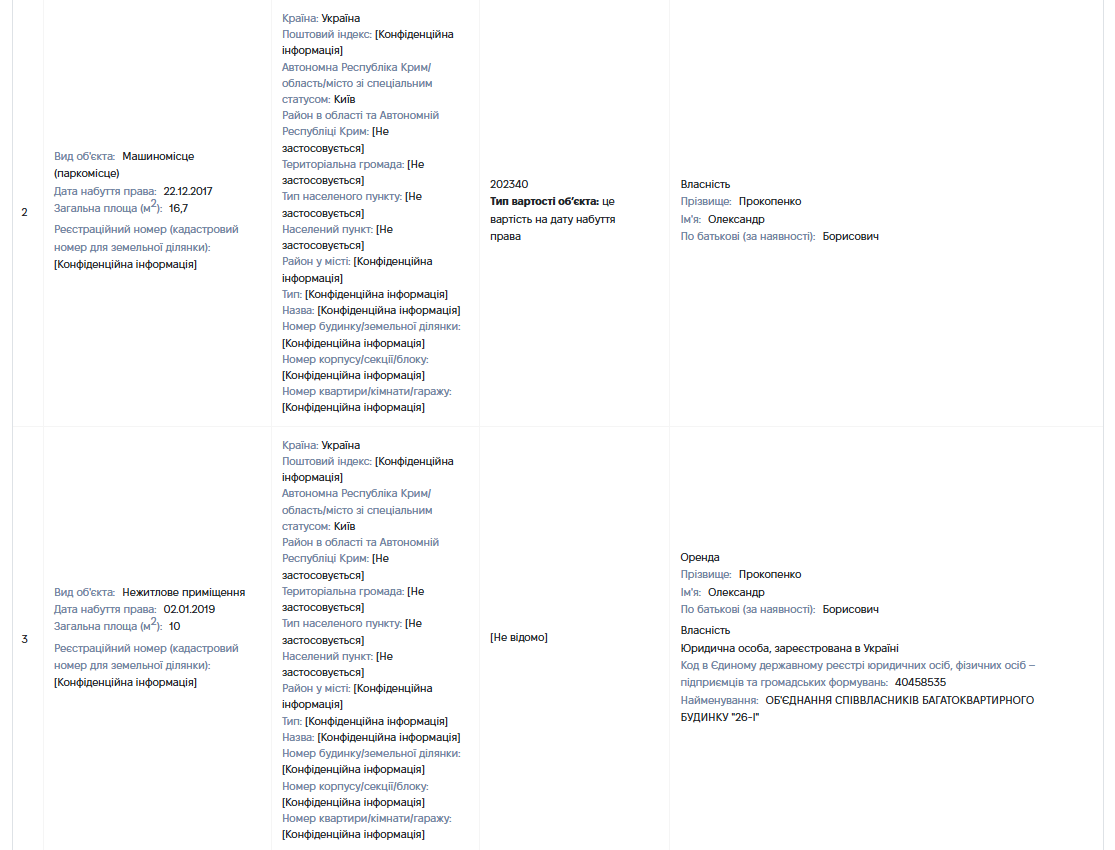
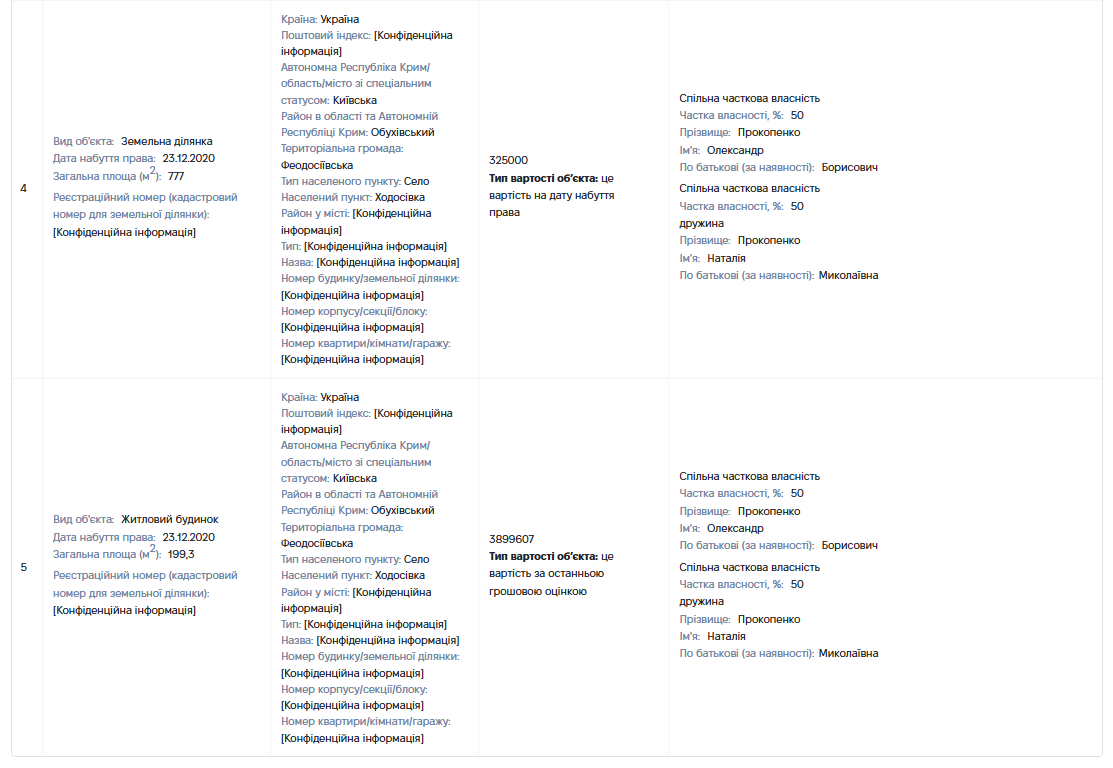
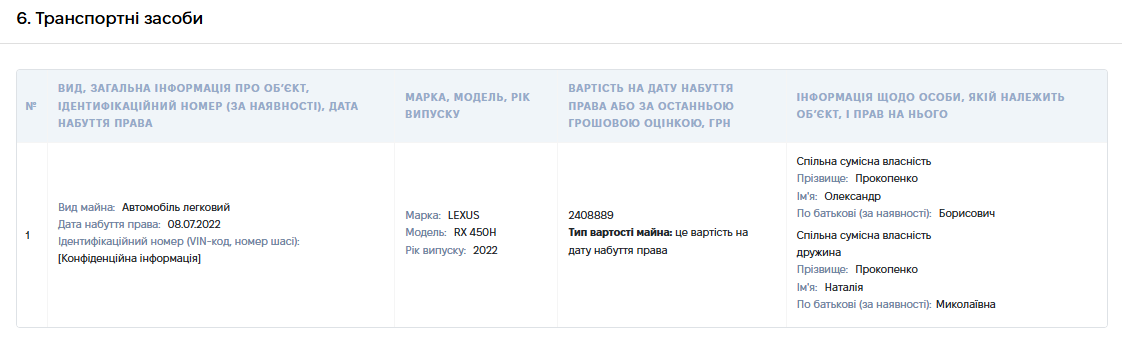
In addition, the couple jointly owns a Lexus RX 450H car worth 2.4 million hryvnias.
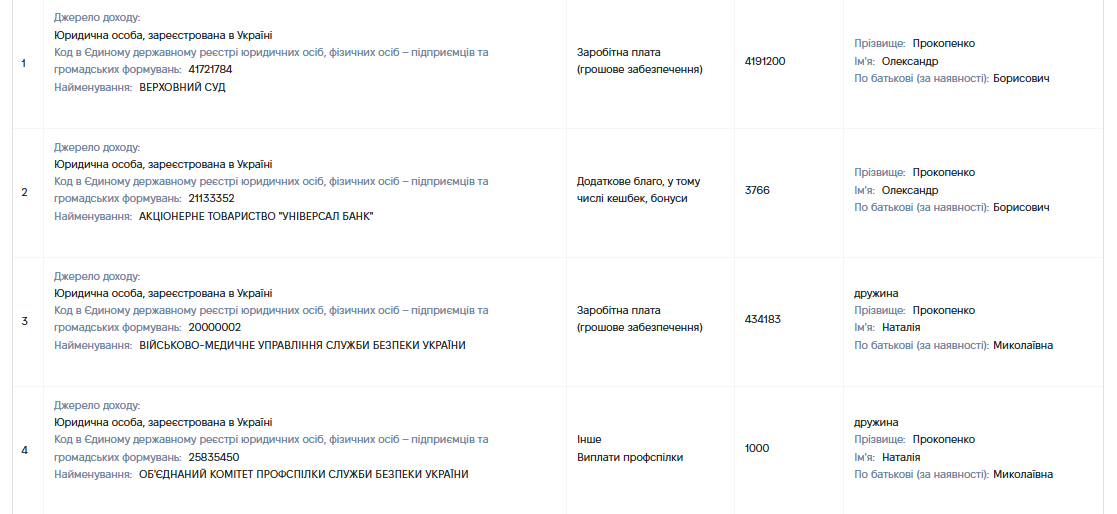
Prokopenko's income for the same year was 6,363,580 hryvnias, and his wife's was 476,151 hryvnias.
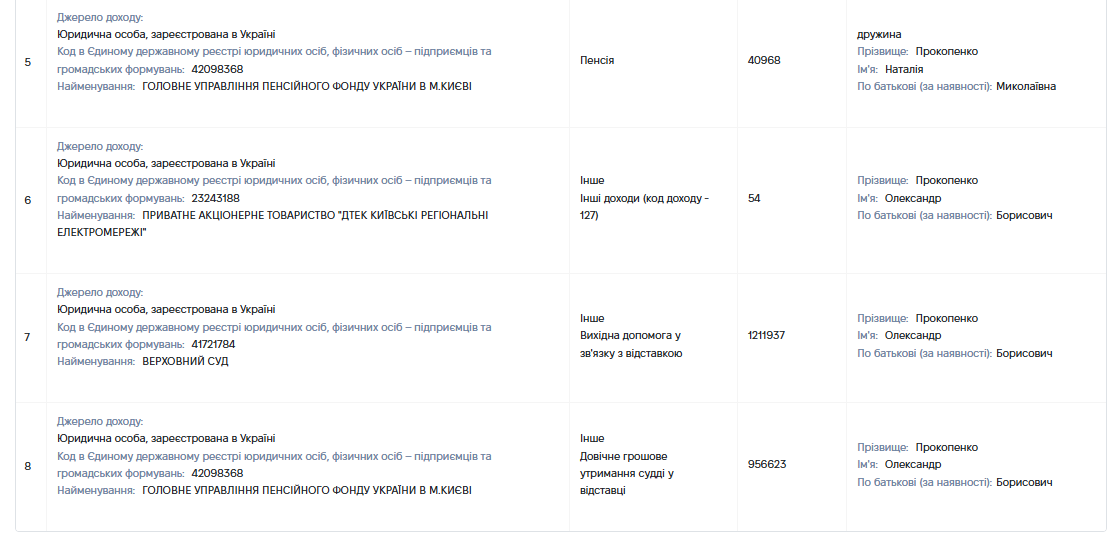
The couple declared 2.4 million hryvnias, 40,000 dollars, and 30,000 euros in cash. Prokopenko has 43,039 hryvnias in his bank accounts.
Persons who should have reacted: law enforcement agencies responded to the criminal scheme in a timely manner, handing over suspicions to all its participants.
Scandals: According to the Dejure Foundation, Prokopenko participated in the decisions that became the subject of consideration by the ECHR. In 2008, the ECHR adopted a decision in the case “Yaremenko v. Ukraine”. The court stated that key evidence in the criminal case against Yaremenko was obtained in violation of a number of fundamental human rights. In 2009, a joint session was held to review the verdict against Yaremenko and Samoilenko in exceptional circumstances. As a result, the Supreme Court of Ukraine excluded from the text of the motivational part the reference to the evidence that the ECHR indicated, but left the verdict unchanged. In 2012, Ukraine lost the case again at the ECHR. In the case of Yaremenko v. Ukraine 2, the ECHR indicated that the new decision of the Supreme Court of Ukraine was again predominantly based on evidence obtained in violation of rights and in the presence of serious allegations that the confessions were obtained under duress. Thus, the Supreme Court of Ukraine ignored the decision of the ECHR, thereby confirming the violation of Yaremenko's right to a fair trial, the right to defense, the right to remain silent and not to testify against himself. Oleksandr Prokopenko also did not indicate in his declaration of integrity that he made a decision as part of the panel of judges that was the subject of consideration by the ECHR.
Also, according to the Foundation, Prokopenko privatized official housing. The judge received an official apartment with an area of 126.9 sq.m. in a new business-class building in Dnipro. Later, this apartment was privatized by the judge's mother. In 2014, the judge inherited this apartment from his mother. Thus, the judge used his official position to meet personal needs. Privatization of official housing deprives other judges, civil servants, and vulnerable categories of the population who really need it of the opportunity to obtain such housing.
Sources:
https://supreme.dejure.foundation/prokopenko-o-b
https://public.nazk.gov.ua/documents/4a229a7e-34cc-4b9a-8e65-01f706a92abe